
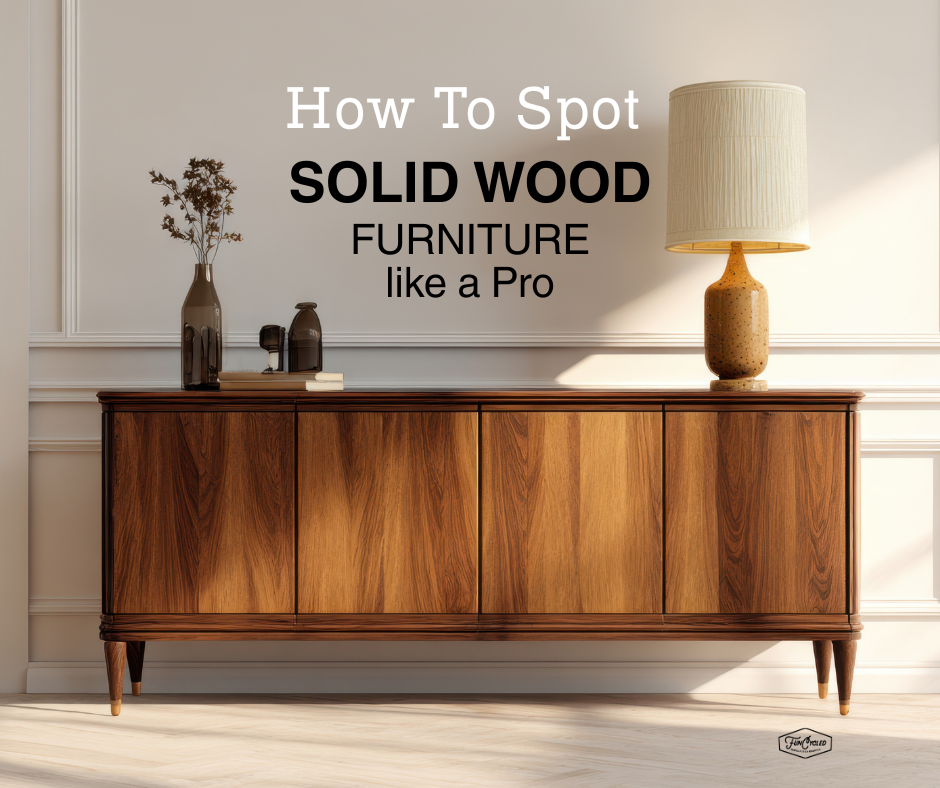
The biggest fear when buying furniture is spending thousands on a “hardwood” table only to have the surface peel off like a sticker two years later. Modern veneers and laminates are so convincing that even seasoned shoppers get fooled.
If you want to invest in pieces that last a lifetime, you need to know how to identify solid wood furniture on the spot. This guide will give you the “detective tools” to spot the real deal and navigate the confusing world of big-box retailers.
Why Solid Wood is the Ultimate Investment
Beyond its natural beauty, solid wood is the “gold standard” of furniture for three reasons: longevity, repairability, and value. Unlike mass-produced “engineered wood,” which often ends up in a landfill, solid wood is a living material that can be sanded down, refinished, and repaired indefinitely. It is also naturally stronger and more structural, meaning it won’t sag under the weight of books or heavy dishes over time. While the upfront cost is higher, you are buying an heirloom that actually gains character with age, rather than a temporary piece that begins to degrade the moment it leaves the showroom.
By choosing solid wood, you’re bringing a cleaner, more breathable product into your living space.
Healthy home tips from the funcycled design team
The 5-Point “Solid Wood” Checklist
Before we cover which companies are using solid wood, here is a quick checklist that will help you before you buy:
- The Grain “Wrap”: Look at the edges. Does the wood grain on the top surface continue around the edge and into the “end grain”? If there is a sharp seam or the pattern changes abruptly, it’s a veneer.
- The “Repeat” Scan: Nature never repeats itself. Scan the surface for identical knots or swirls. If you see two identical patterns 12 inches apart, it’s a printed laminate.
- The Underside Audit: Manufacturers rarely waste expensive veneer on parts you can’t see. Look under the table or behind the dresser. If the bottom looks like rough, unfinished wood, it’s solid. If it looks like smooth, gray “sawdust” board (MDF), keep moving.
- Inspect the Joinery: Pull out a drawer. Dovetail joints (interlocking teeth) are a hallmark of solid wood. If you see staples, glue, or plastic brackets, it’s likely a composite material.
Where to Buy: The Top Contenders
If you want to skip the guesswork, these brands are famous for their commitment to solid hardwood. Next to each company you will find a quick reference for the cost, starting with the least expensive and working up to the most expensive.
The Heirloom Standards
- Vaughan-Bassett : Manufactured in Virginia and North Carolina. Best For: Solid wood bedroom sets at a mid-range price point.
- Vermont Woods Studios ): Handcrafted in Vermont using North American hardwoods. Best For: Those who want eco-friendly, artisan-made furniture that lasts 100 years.
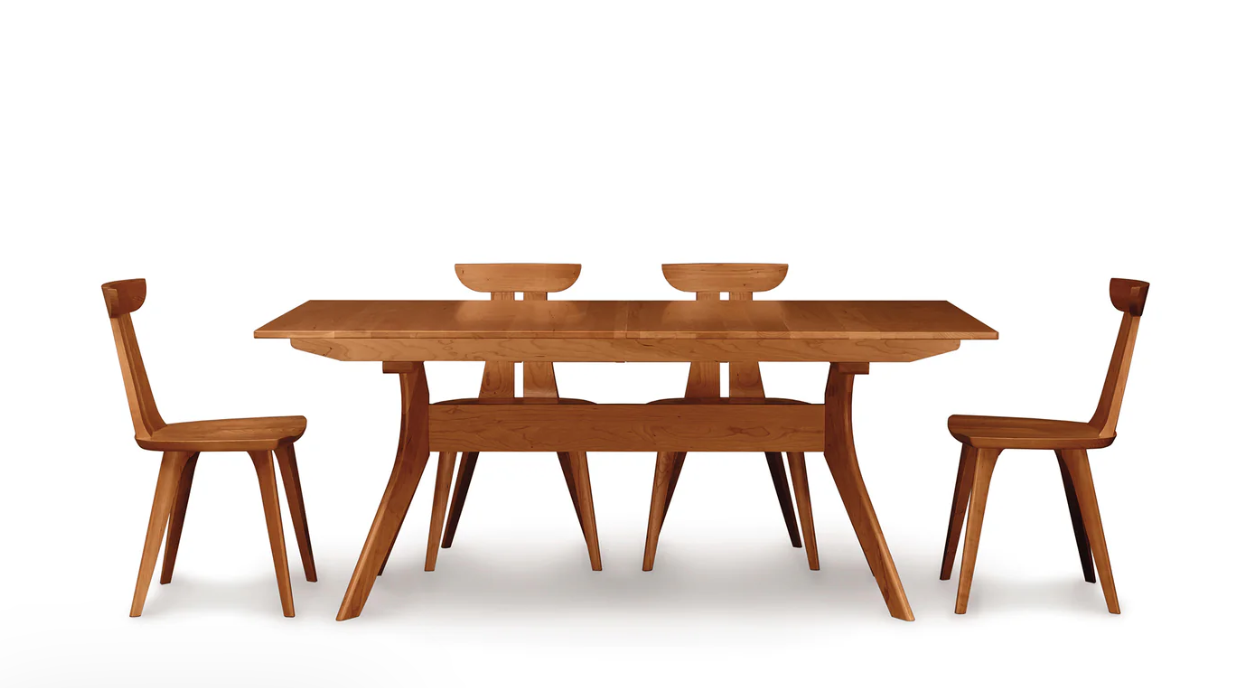
- Stickley : The go-to for solid oak and cherry. Best For: Buyers looking for iconic Mission-style investment pieces.
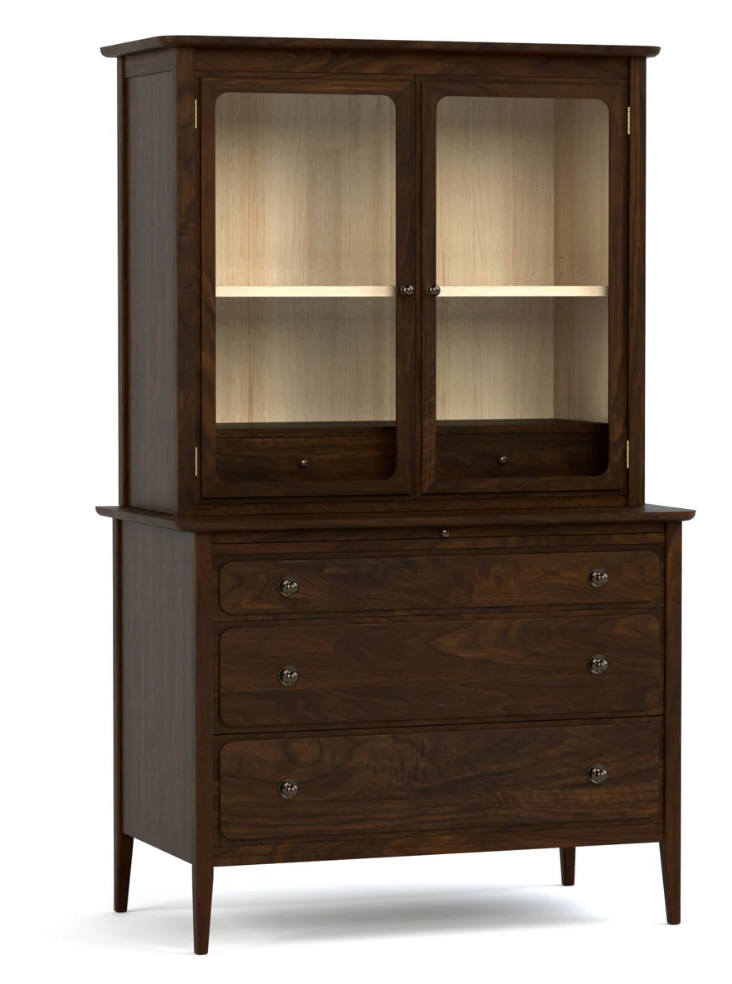
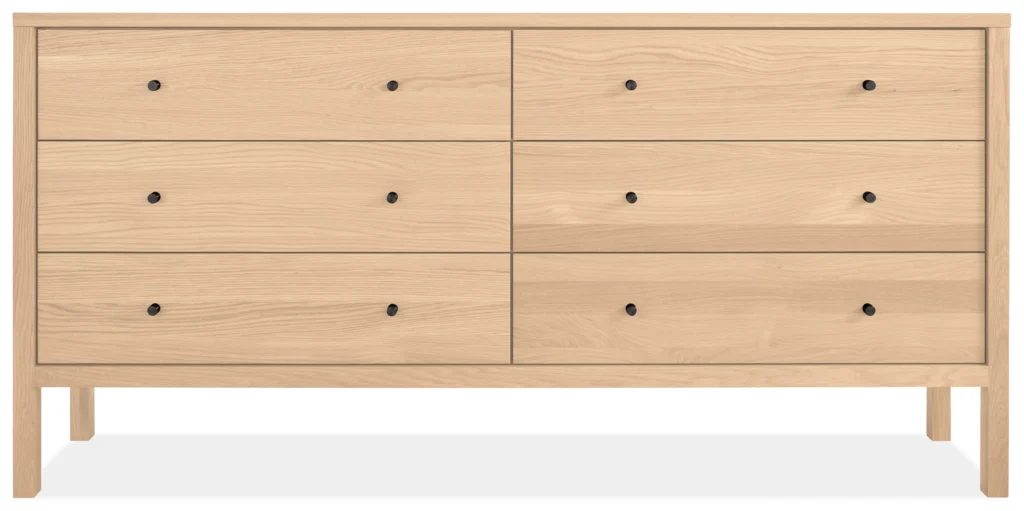
- Room and Board: Partnering with small, family-owned workshops across the U.S. (specifically Minnesota, Vermont, and Pennsylvania). Best For: Those who want clean, modern aesthetics without sacrificing the integrity of solid American hardwoods like Walnut and Cherry.
Here’s my top picks from these Heirloom Standard Companies
The “Big Box” Filter (Amazon, Wayfair, Birch Lane)
You can find solid wood here, but you must read the “Technical Specifications” carefully.
- Wayfair/Birch Lane: Use the “Material” filter and select “Solid Wood.” Look for brands like Grain Wood Furniture (Solid Pine) or International Furniture Direct (Solid Mango/Pine).
- Amazon: Search for Simpli Home. They focus on plantation-grown solid wood and are the most reliable “budget” solid wood option on the platform. Please note, some products are also made with a combo of engineered wood and pine.
Pine is not a hard wood. It is a softer wood and will scratch and dent more easily. Pine, however, is typically more affordable.
Pro Tip from the funcycled design team
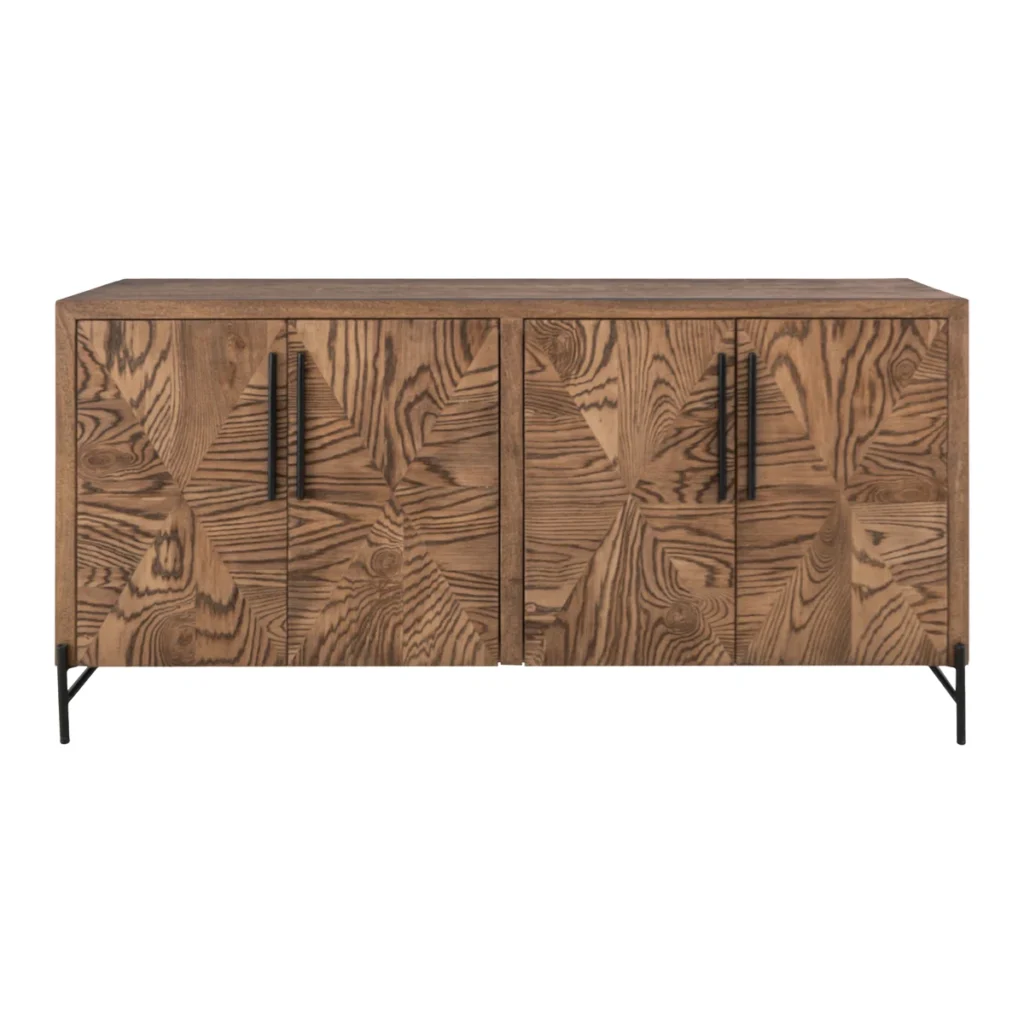
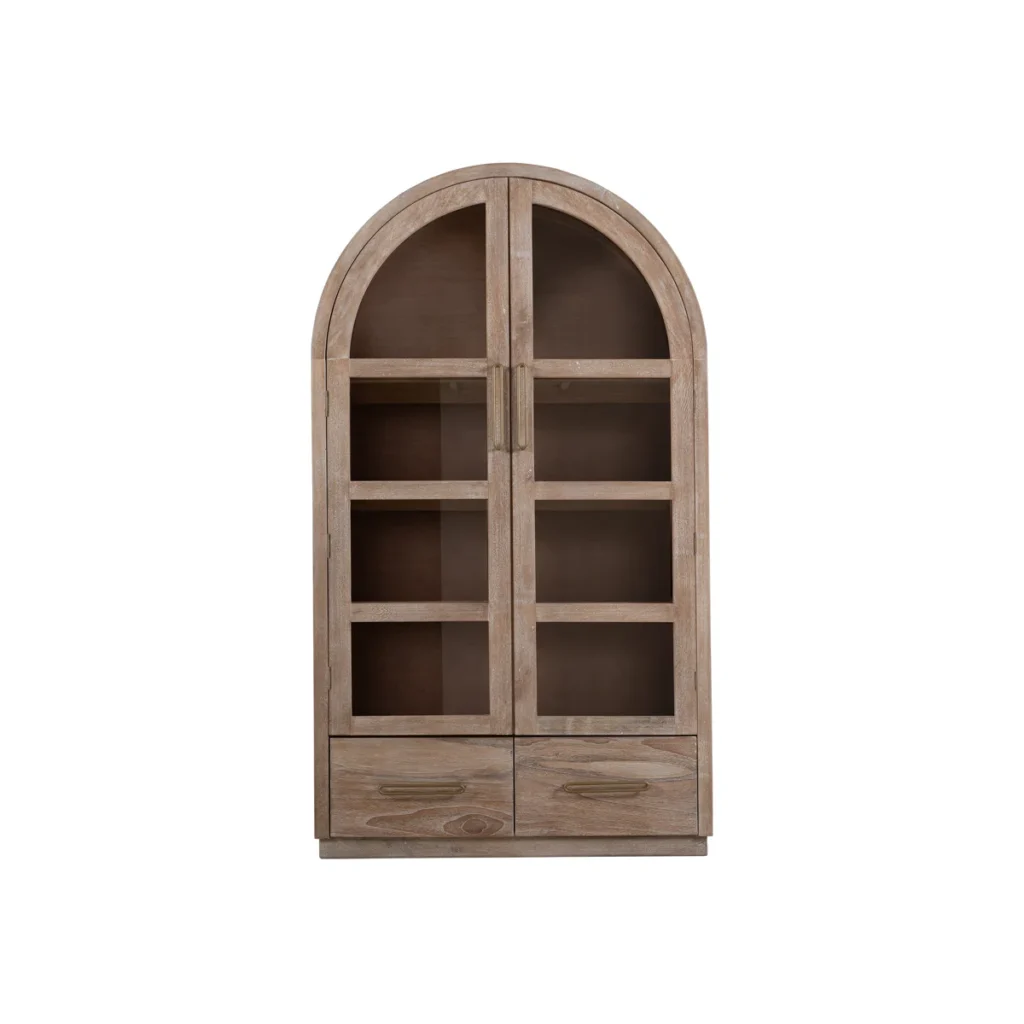
I love the options from International Furniture Direct. This company offers a more unique and artisan look (similar to what you would find with high end makers but at a lower price point. Here are two favorites from them:
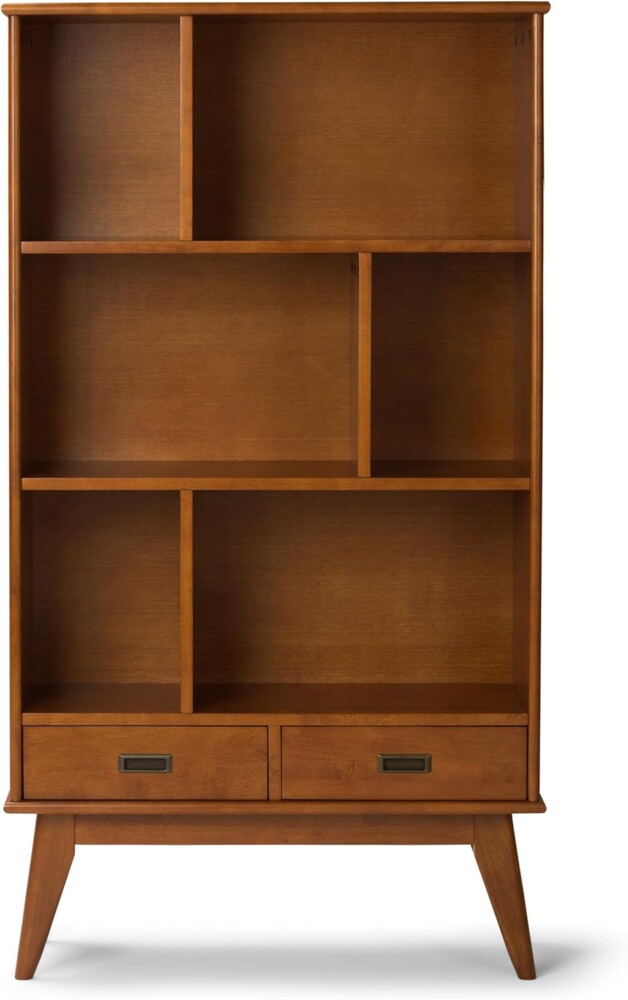
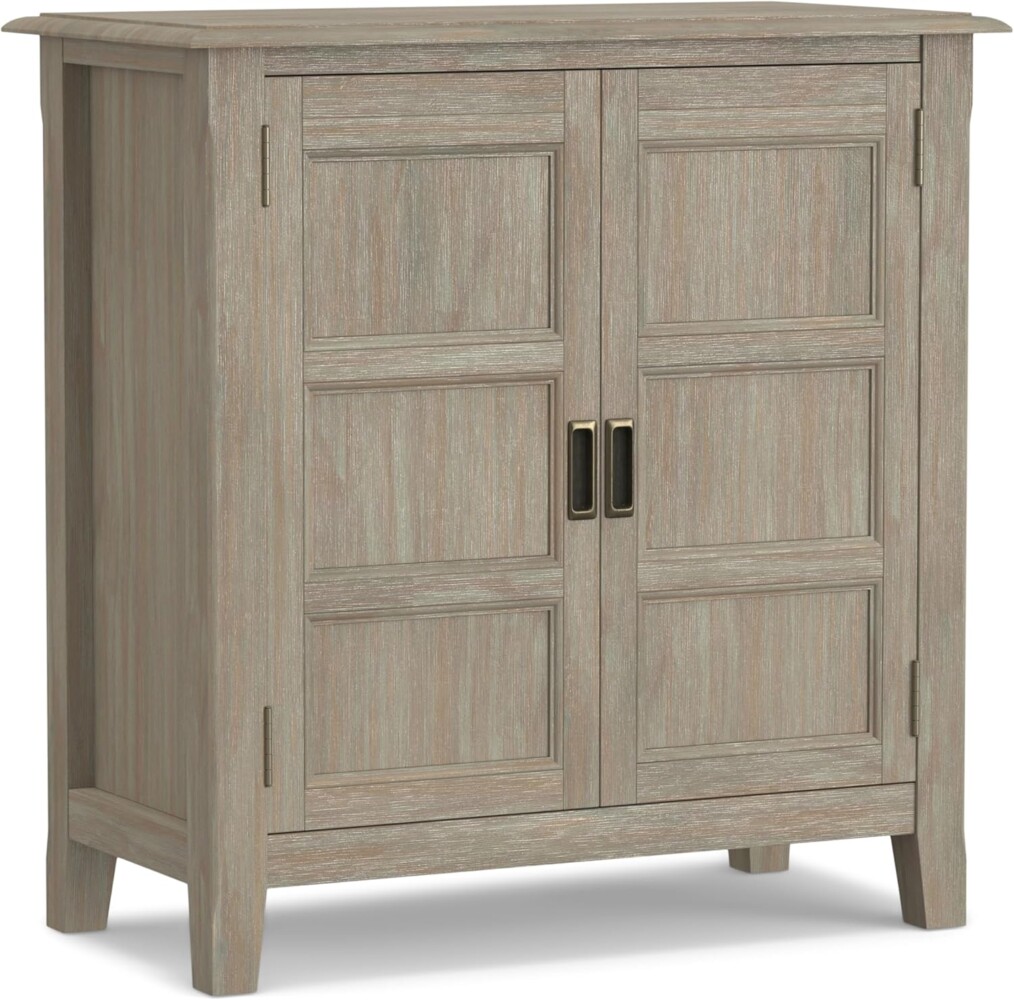
With SimpliHome, the uniqueness is lacking a bit. And some of their pieces are actually a combination of solid and engineered wood. But you can still find some great staple storage kinds of cabinets and shelving. Here are my top picks from them:
Clearing the “Heritage Brand” Confusion
Brands like Pottery Barn, West Elm, and Crate & Barrel occupy a tricky middle ground. They use what I might call a “hybrid model.”
- Pottery Barn: Some of their long standing collections may offer pieces of full solid wood, but their “trend” pieces are often veneers.
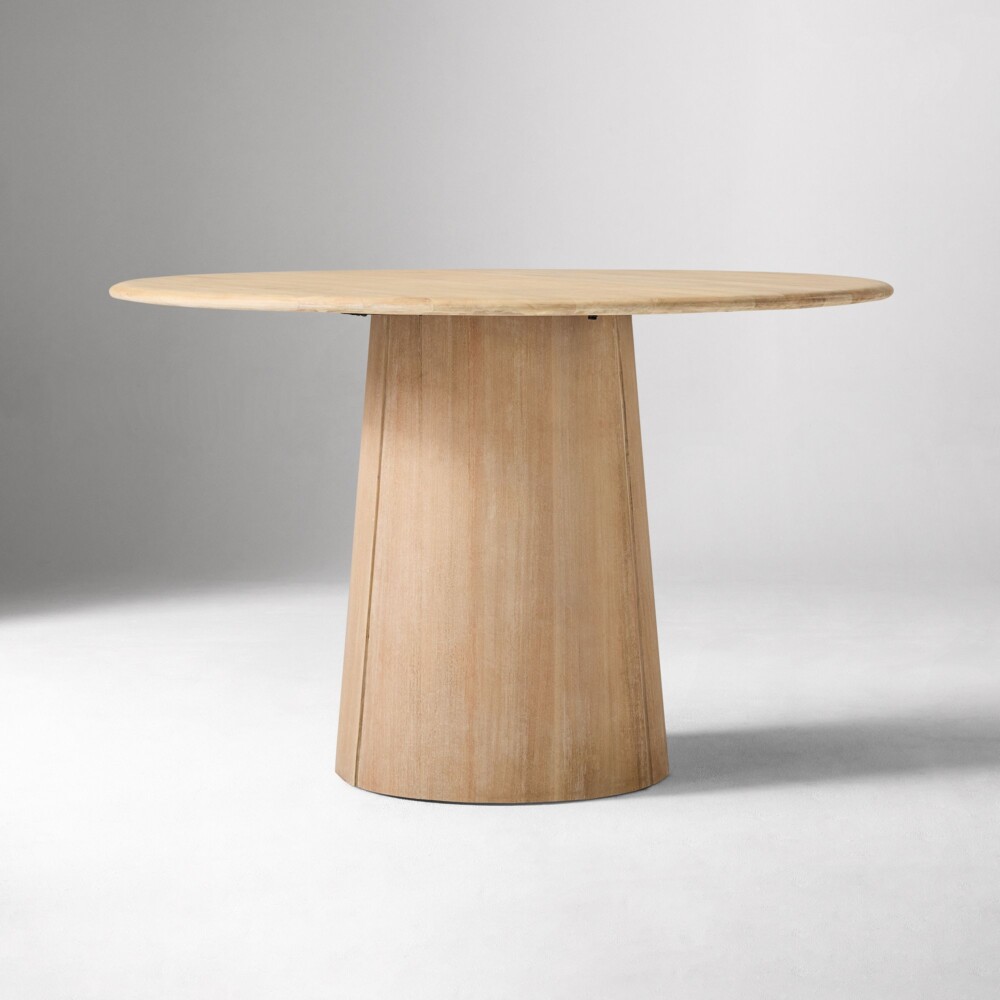
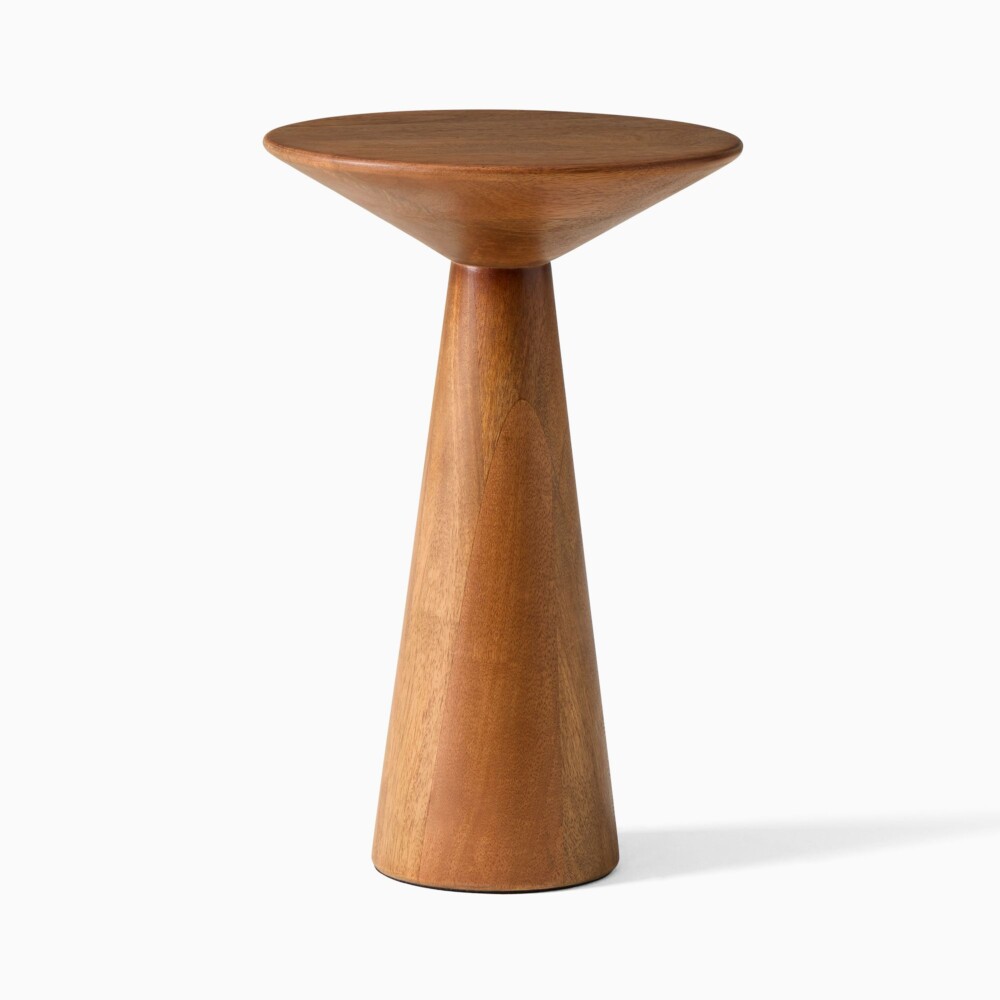
- West Elm: Their “Mid-Century” aesthetic often requires veneers to keep the thin legs stable. For solid wood, the Anton collection offers a number of pieces, and even some of their “one-off” pieces like the Meyer drink tables are as well.
Always check the details section for these companies. If you see “engineered wood” or “MDF,” it is not a solid wood piece.
pro tip from the funcycled design team
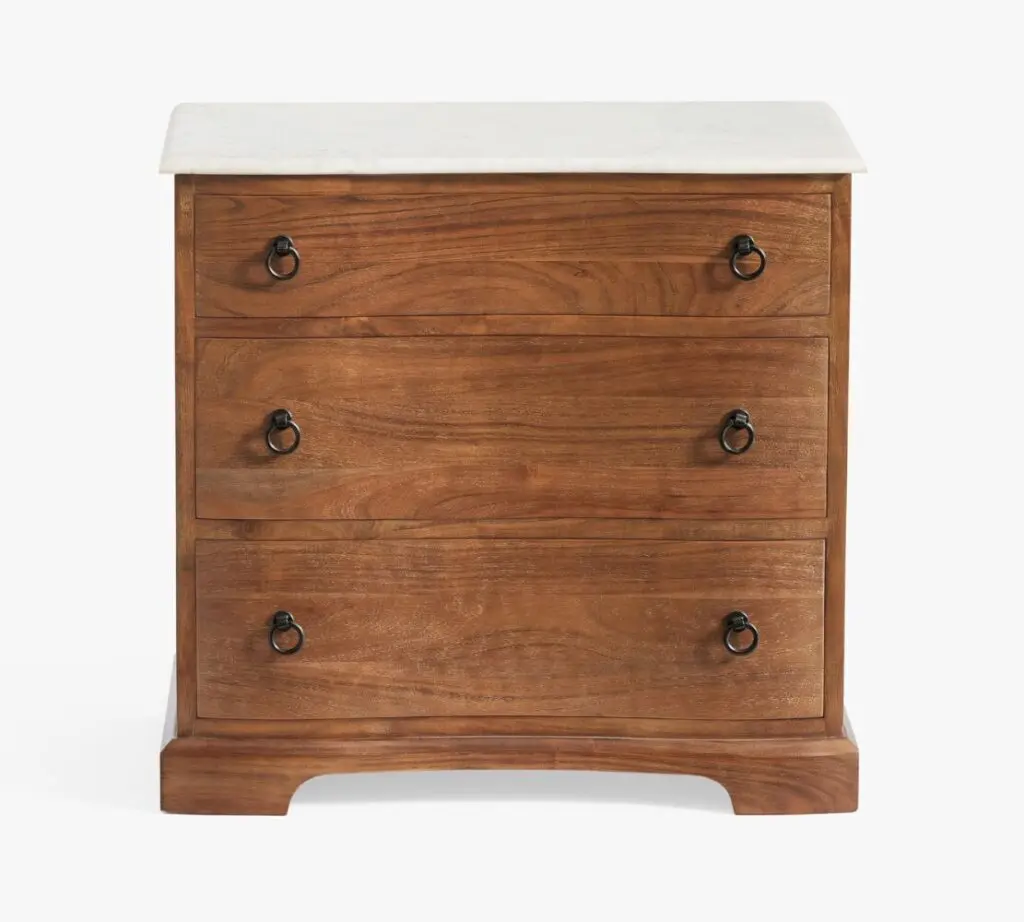
Here’s what I love from Pottery Barn
Here’s what I love from West Elm
Who Should SKIP Buying Solid Wood?
It may seem like an odd thing to even include, but buying solid wood isn’t for everyone. Beyond tight budgets, here aer some reasons buying solid wood may not be for you. Do not buy it if:
- You live in a home with extreme humidity swings (wood can warp or crack).
- You want a “perfect,” sterile look without natural knots or color variations.
- You move frequently; solid hardwood is extremely heavy.
Find the Right Piece for Your Home
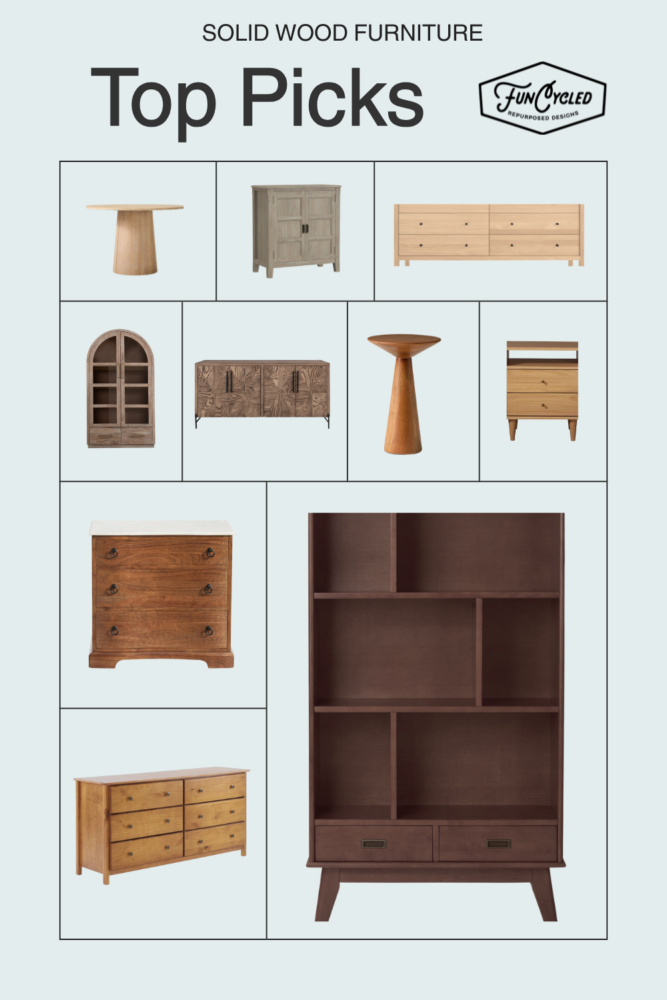
Soaking in all of this information can be a little overwhelming. To help get you started on finding the right piece for your home, I have linked my TOP PICKS from furniture pieces made with solid wood. Everything is linked up in one place for you. Just click the image below to start shopping! (Please note: just as this post discusses, some items are made with a mix of solid wood combined with engineered wood and/or MDF, so reading the details will be important.)
Thank you all for following along! If you’d like to get this blog in your email once a week, please sign up for our weekly newsletter by adding your email in the little box below my picture at the top of this page.
If you’ve enjoyed this post, please like FunCycled on Facebook, Instagram and Pinterest if you don’t already. Keep up to date on the newest finds, vote on colors and give your input on our creativity. We share fun tutorials, great before and after, and new design inspirations.
We offer interior design, kitchen cabinet painting, and custom built tables, barn doors, and repurposed furniture. Thank you, again, for working with us and for taking the time to spread the word about what we do. This post may contain affiliate links. I may earn a small commission at no extra cost to you. As always, I only recommend products I genuinely love and trust.
Happy FunCycling Friends,
Sarah ; )
Because home is where peace begins.
Note some of the the links provided are affiliate links, and I may earn from any qualifying purchases.

That was a great post! Thank you for all of your advice and information.
Donna, so glad you found it helpful! We always want to equip our readers and clients with the “tools” and knowledge they need to make the best choices for their homes! All the best with your design decisions, and let us know if you ever need any help! We would love to : )