
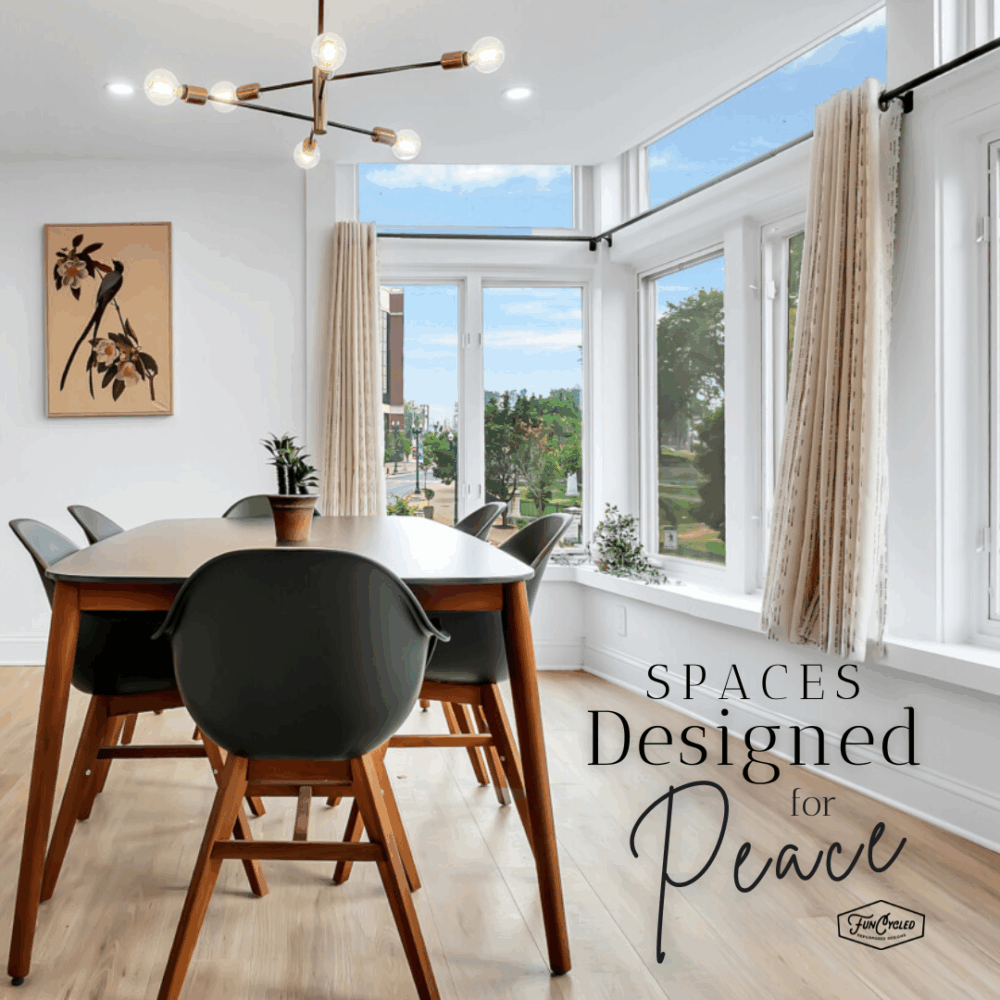
Fostering peace and healing in your home starts with understanding how the spaces around you affect your mind and body. Perhaps you have walked into a room and felt an almost instantaneous sense of calm? Or, maybe to the contrary, you have felt a tension you couldn’t quite explain? Studies show that spaces filled with natural light, soothing colors, and organic textures can lower stress hormones, improve focus, and even restore cognitive function. Beautiful spaces, as it turns out, are more than just well designed interiors created to look pretty, they can actually help us heal.
This is the heart of trauma-informed design. According to the Trauma-Informed Design Society, it’s “an approach to creating physical spaces that integrate principles of trauma-informed care (safety, trust, choice, empowerment, and community) into design decisions, with the goal of promoting well-being, dignity, and healing.” Simply put, trauma-informed design recognizes that spaces can either trigger stress and fear or foster safety, calm, and restoration.
In practical terms, this means the design choices we make, from lighting and layout to materials and colors, can influence our nervous system, help regulate emotions, and create environments where people feel truly seen and supported. Whether it’s a home, a workplace, or a community space, trauma-informed design is about more than aesthetics; it’s about creating a sanctuary for the mind and soul.
What Is Trauma-Informed Design?
At its core, trauma-informed design is about creating spaces that acknowledge how past experiences affect how we interact with our environment. It emphasizes safety, emotional regulation, and dignity. While the concept originated in healthcare and social service settings, it’s increasingly being applied to homes, workplaces, and community spaces.
Your home is more than a backdrop for daily life; it’s a place that can actively support your mental and emotional well-being. Neuroscience shows that spaces filled with order, natural light, and soothing textures help calm the amygdala, which is the part of the brain that detects threats. Plus, carefully designed homes with these principles in mind can reduce cortisol, the body’s primary stress hormone. Conversely, cluttered or overstimulating environments can leave your nervous system on high alert, making it harder to relax, focus, or sleep.
Why Your Home Environment Matters
The way we design our spaces directly impacts how we feel. Studies show that open layouts, soft lighting, and natural materials activate the parasympathetic nervous system, responsible for rest and repair, signaling safety to the brain and lowering anxiety.
- Lighting: Soft, warm lighting helps your body wind down, supports circadian rhythms, and can even boost serotonin levels for improved mood.
- Order: Cluttered spaces are linked to increased stress and reduced working memory. Even if we don’t consciously notice it, our brains do.
- Texture & Material: Wood, stone, and other natural materials have been shown to reduce stress and improve focus.
“The goal of design is not perfection. It is peace, and peace creates space; for your family, for healing, and for the voice of God.”
Sarah Trop
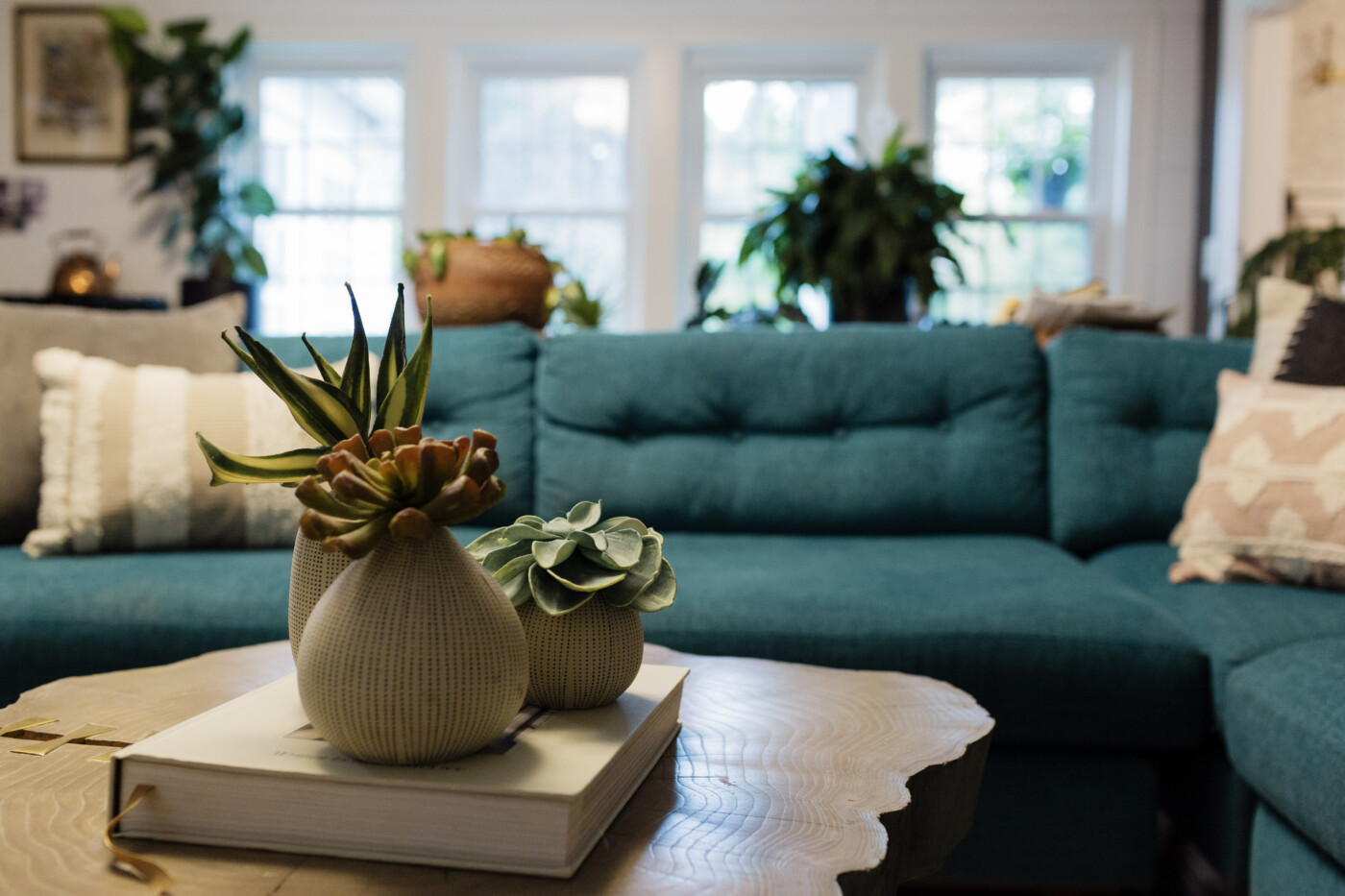
Core Principles of Trauma-Informed Design
- Safety & Security
Spaces should feel predictable and approachable. Clear sightlines, uncluttered surfaces, and thoughtful layouts help create a sense of safety. - Choice & Control
Offer flexibility where possible. Incorporate adjustable lighting, seating options, or spaces that allow privacy. Having control over one’s environment fosters empowerment. - Connection & Belonging
Design spaces that encourage community and togetherness. Communal areas and intentional furniture arrangement help people feel included and supported. - Calm & Emotional Regulation
Soft textures, muted or natural color palettes, and biophilic elements can help the nervous system regulate and support emotional balance.
Bringing Nature Indoors: Biophilic Design
Biophilic design is a natural complement to trauma-informed principles. It incorporates elements of nature (light, plants, organic shapes, water, and earth-inspired colors) into our everyday spaces.
Research shows that even brief exposure to natural elements can:
- Lower blood pressure and heart rate
- Reduce anxiety and depression
- Improve focus, memory, and cognitive function
“At its heart, it’s about recognizing that humans thrive when we’re surrounded by reminders of the natural world. Instead of sterile, boxy rooms, you get spaces that feel alive, restorative, and grounding.”
Sarah Trop
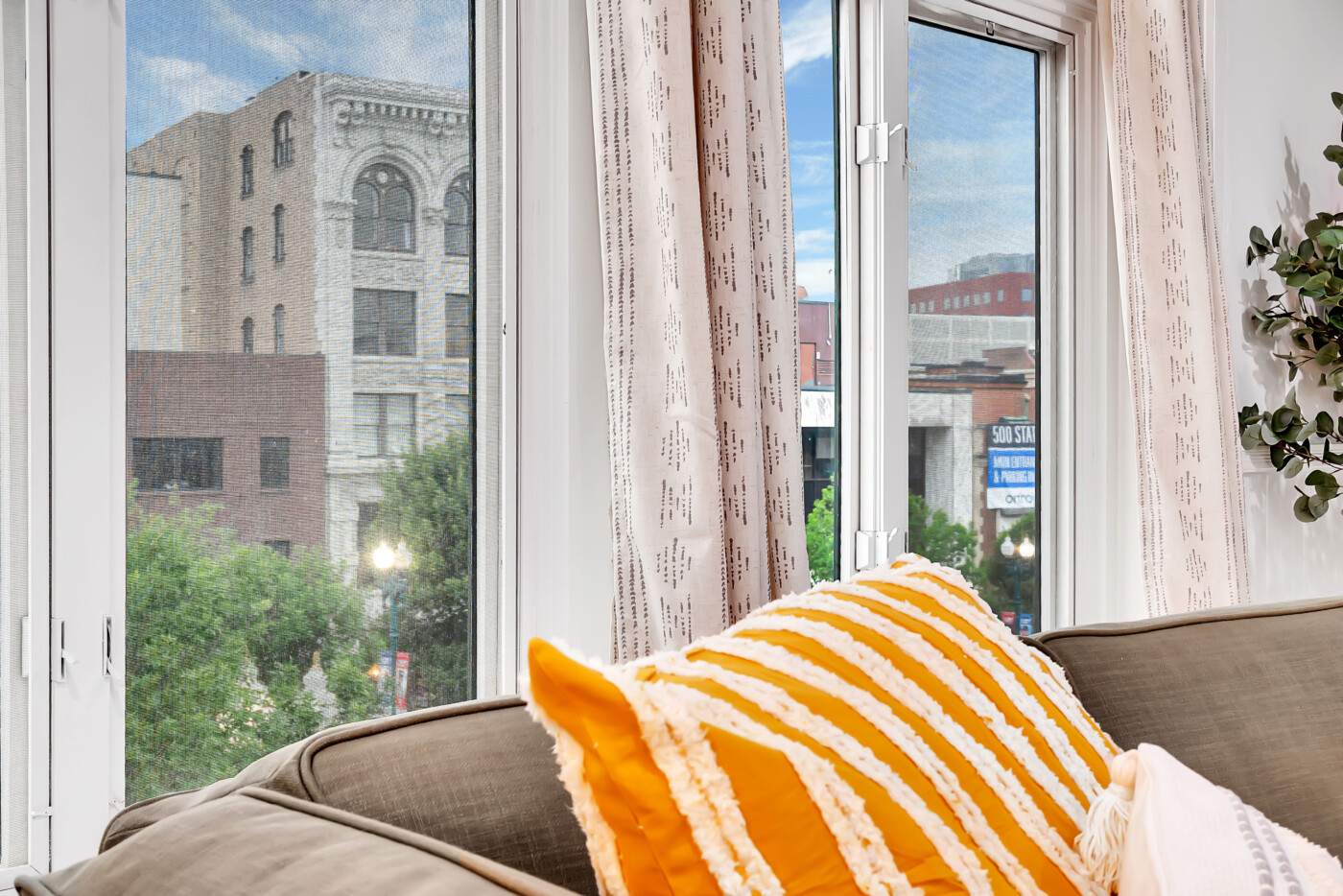
The foundation of Biophilic Design strives to connect people with nature. From a design perspective, these principles translate to small but intentional decisions: warm wood tones, furniture with soft edges or curved design for comfort, and open shelving to create breathing room. These are all strategies I applied in my Schenectady Airbnb project and have shared some pictures below.
By pulling the sofa away from the windows and then framing them in soft drapery, the space is focused on the outside and natural light while still creating a softness within the room.
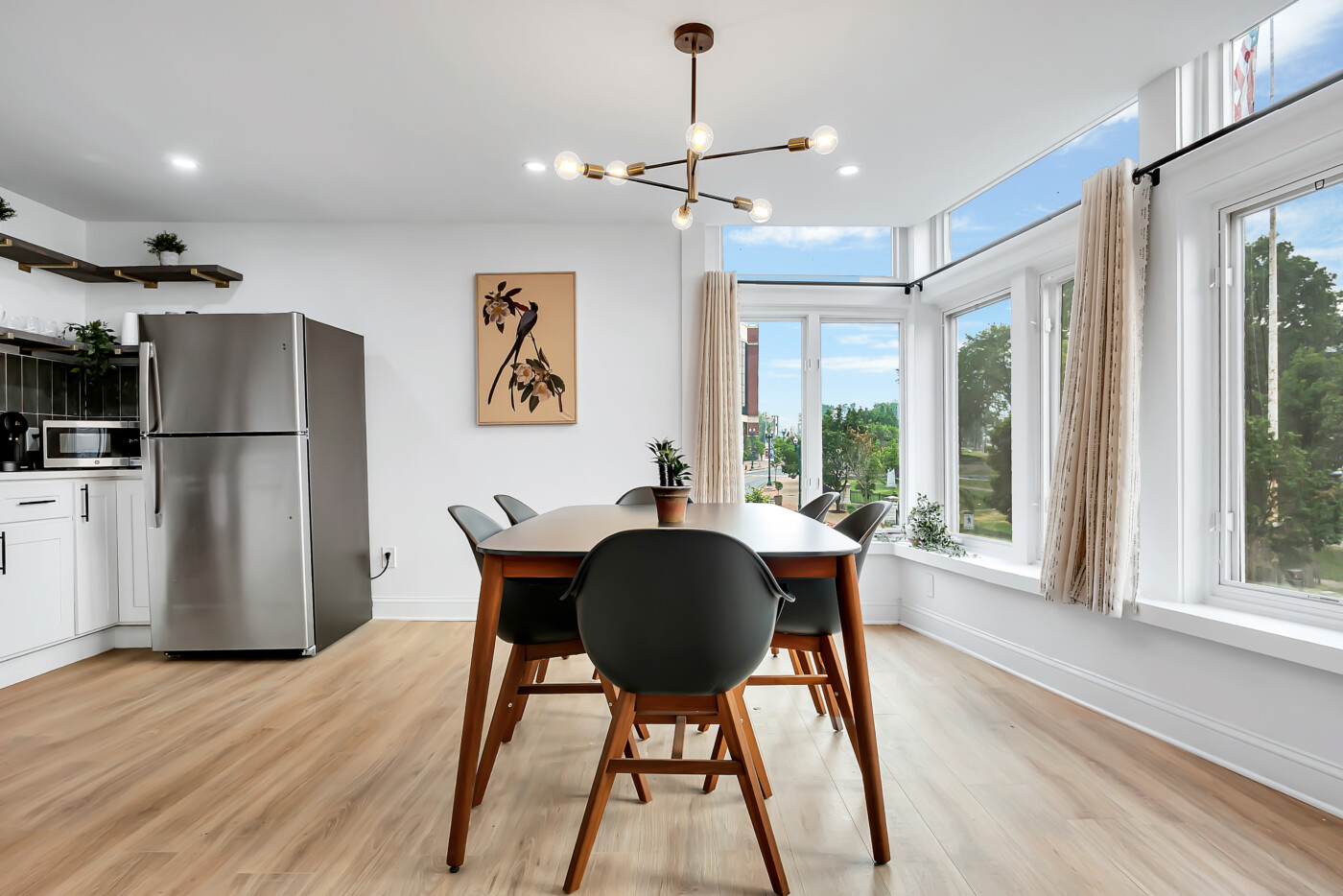
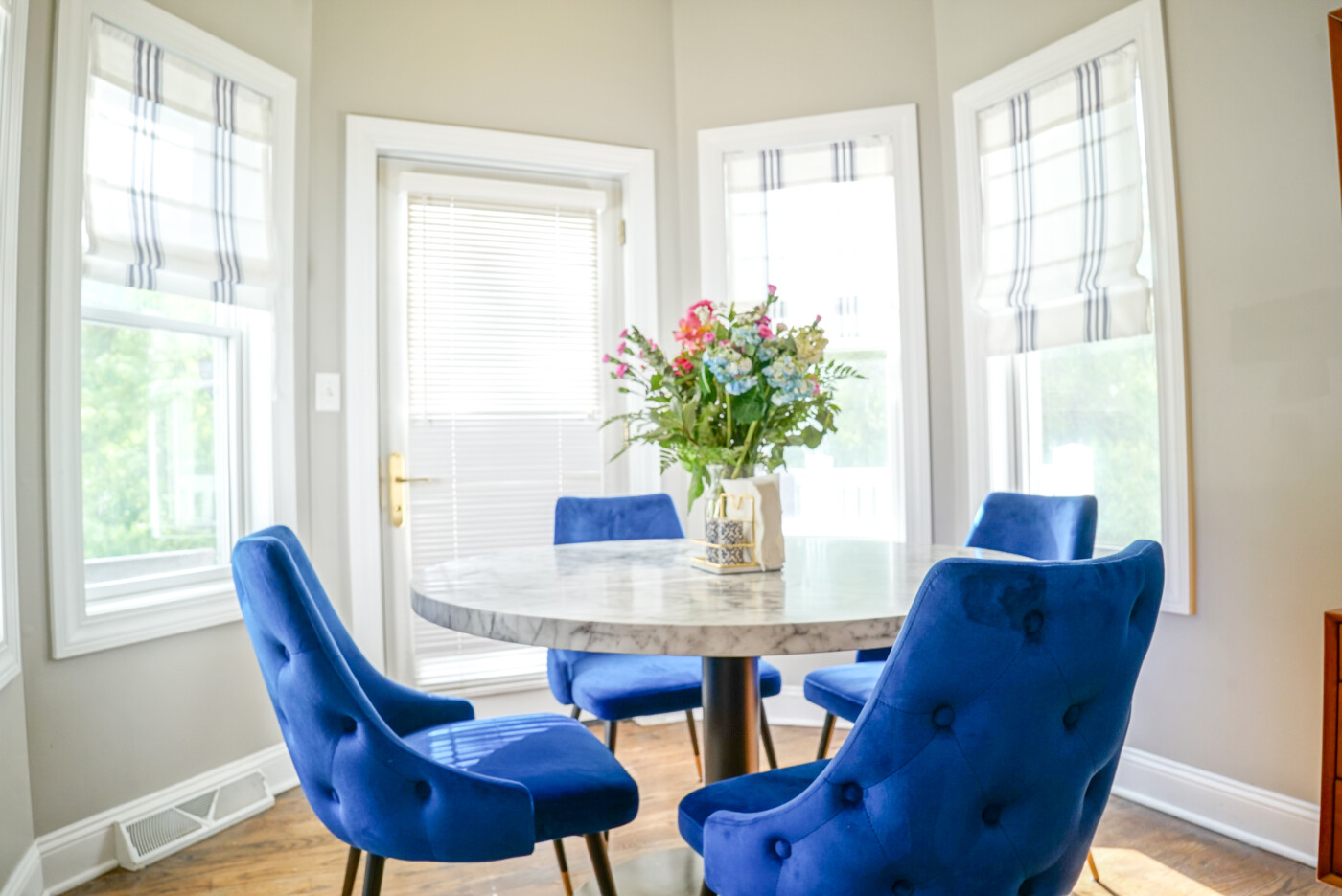
Light and openness are key to this kitchen dining area. The spaces stays grounded and anchored with the natural wood table but maintains a clean flow and brightness by keeping the windows mostly exposed.
Small, Practical Ways to Foster Peace at Home
Cultivating peace inside the home is actually an important goal for everyone, no matter the journey you have been on. And what’s great is that you don’t need a full renovation to achieve this or begin incorporating the principles of trauma informed design into your home. Simple changes can have a significant impact:
- Declutter and organize to reduce visual stress.
- Layer your lighting: combine ambient, task, and accent lighting.
- Introduce nature: add plants, natural textures, or water elements.
- Use calming colors and textures: soft neutrals and cool blues and greens, warm woods, and gentle fabrics and patterns.
- Create intentional corners: a reading nook, meditation space, or cozy chair for reflection.
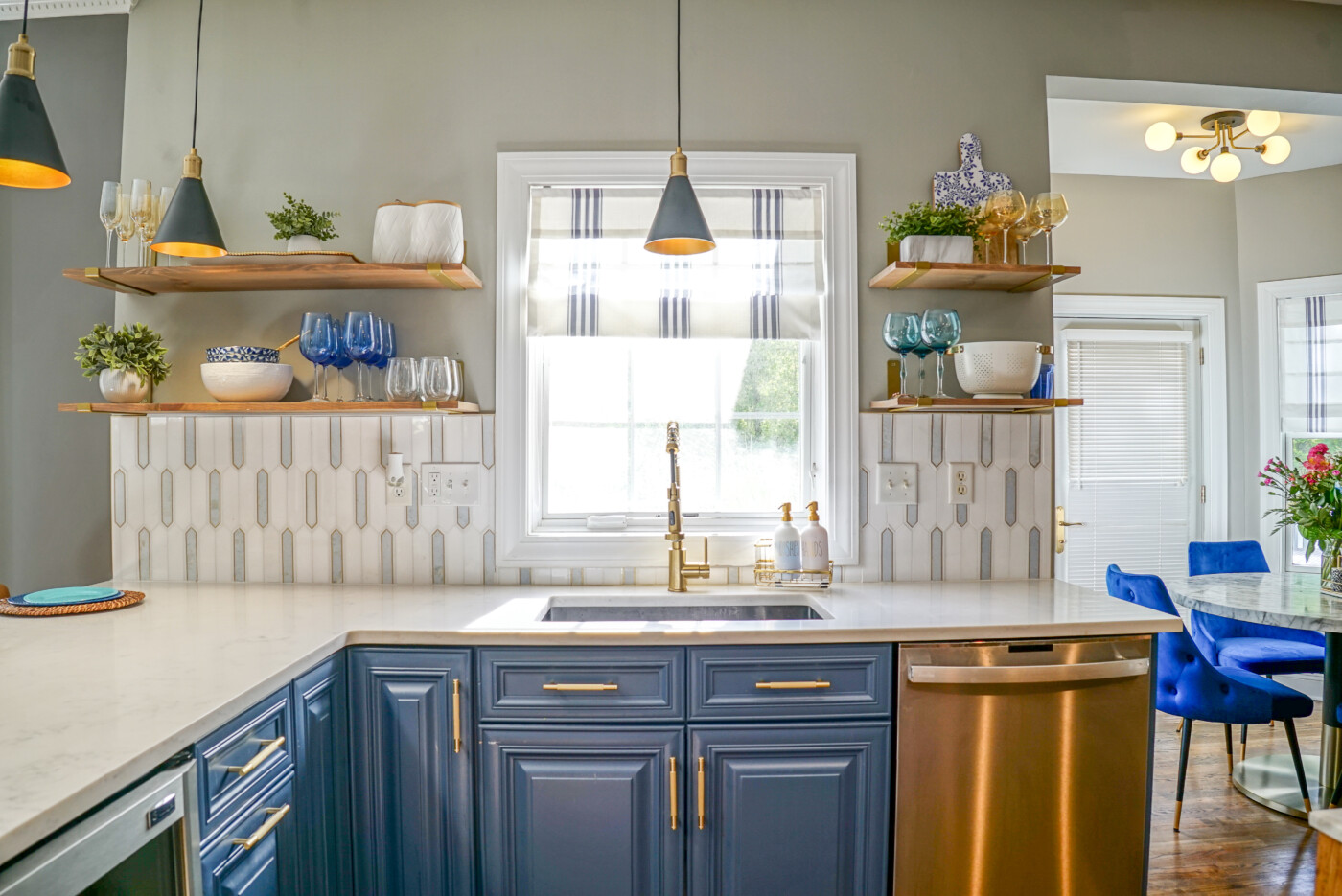
Even small interventions help your home become a sanctuary where you and your loved ones can feel grounded and supported. This kitchen is a great example of how using soft and soothing colors in a strategic way that allows the space to feel calm. Plus the open shelving and soft lighting support a relaxed environment.
Using a circular table helps create an area the promotes community as well as safety for those who gather at it.
Creating a Sanctuary for Mind and Soul
A trauma-informed home is emotionally generous. It becomes a quiet companion, offering clarity, rest, and comfort amid the chaos of daily life. By thoughtfully incorporating light, color, layout, and natural elements, you can foster peace and healing for yourself and anyone who enters your home.
As I like to remind readers: even small adjustments can ripple into a profound sense of calm. Begin by noticing how your spaces make you feel, then make intentional changes to invite serenity, restoration, and joy into your everyday life.
“Design does not need to be dramatic to be therapeutic. Sometimes, it is the quietest choices that bring the most healing.”
Sarah Trop
Final Thoughts
Thank you all for following along and taking the time to learn more about trauma-informed design. This topic is so important, and I am grateful to build awareness to such an important mission. What an honor to have bring healing and restoration to those in need through design!
If you’d like to get this blog in your email once a week, please sign up for our weekly newsletter by adding your email in the little box below my picture at the top of this page.
If you’ve enjoyed this post, please like FunCycled on Facebook, Instagram and Pinterest if you don’t already. Keep up to date on the newest finds, vote on colors and give your input on our creativity. We share fun tutorials, great before and after, and new design inspirations.
We offer interior design, kitchen cabinet painting, and custom built tables, barn doors, and repurposed furniture. Thank you, again, for working with us and for taking the time to spread the word about what we do.
Happy FunCycling Friends,
Sarah ; )
Exquisite Spaces. Sustainable Designs. Brighter Futures.
Note some of the the links provided are affiliate links which means I earn from any qualifying purchases.
THIS IS AMAZING. I love your newsletters too. I don’t even live nearby anymore but I look forward to what you have to say. I have never seen this topic before but I relate to it strongly and I am excited to learn more about trauma informed design. I currently serve in prison ministry in the south and I think this could help a lot of them as they anticipate their release. It is nice to finally have validation for something that seems so intuitive to some of us but so foreign to others!!!
Thank you for your kind encouragement! Yes, it is not a widely discussed concept but is such an important one. Thank you for the service you do through prison ministry-what a noble calling and evidence of someone who cares deeply. Thank you for rising to that occasion! I hope to share more on this in the coming weeks and months. Grateful for your support as I do : )